Back to blog

Posted by Margarita Shvetsova
How to Convert Holidays into Profit for Developers and Fun for Players: 2026 Update
Holidays are always high season for businesses. Retail marketers devise various strategies to capitalize on the moment and maximize profit. For mobile game developers, the holidays also present a wide range of opportunities for experimentation.
The original version of this article was based on data from 2020. This updated edition reflects the most recent data available as of February 2026.
Maximum profit is achieved on Black Friday and during the Christmas and New Year season. For example, in 2024, gamers worldwide spent $6.98 billion on mobile games over the Christmas period, with those in the USA spending $2.2 billion on Black Friday, accounting for 31.8% of the worldwide revenue. In many ways, these profits are influenced by in-game events and special offers.
But what’s the best way to keep users in the game the rest of the year, outside these universally beloved holidays? And how do you balance the expenses of preparing these events with the hoped-for profits?
Let’s take a look at how to leverage holidays throughout the year and use special offers to attract users. In this article, you’ll also find a calendar of holidays and helpful hints for successful event planning.
What good are events, anyway?
Events are a terrific opportunity to use creative content to attract new users and to draw old users back into the game, thereby boosting your profits.
Furthermore, events are great for testing new ideas and hypotheses. During events, you can try out new features, play around with new types of content, and then decide whether to include them in your permanent repertoire or not.
Events also directly affect your users’ average spending level. A holiday atmosphere encourages users to more readily spend money and game resources they’ve been saving leading up to the holidays.
For developers, planning a serious event can be pretty stressful. This can be mitigated by planning for holidays well in advance. The Christmas season comes every year, and your events won’t prepare themselves.
We recommend drawing up an event plan six months to a year in advance to help you assess which events should be prepared for ahead of time. Your team needs to allocate time and energy not only for major updates but also for additional in-game events.
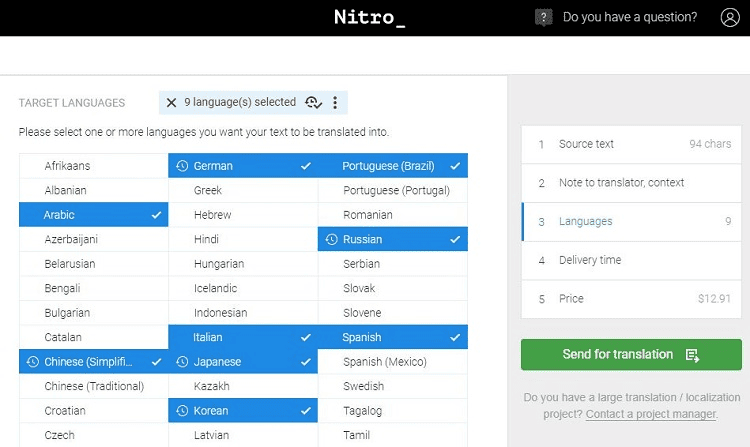
If your players are from different countries around the globe, it’s essential to have translations of new content ready to go. Since these texts are usually relatively short, and you may need translations into multiple languages, the best option is to translate them using professional translation services like NitroTranslate.
You won’t need to go looking for 10–20 translators to cover each of your languages. Simply select the languages you need. Nitro handles translations as short as a single word, and you’ll receive your finished translations within 24 hours—sometimes within just a couple of hours. It’s ideal for translating minor updates!
Which holidays to pick, and how?
Obviously, Christmas and Black Friday are not the only holidays. Besides, these holidays are most popular among American and European users, and audiences in other parts of the world, such as Latin America and Asia, are very promising.
The easiest thing you can do is link your in-game events to popular holidays that are celebrated nearly everywhere: Halloween, Black Friday, Christmas, New Year’s Day, and the Chinese New Year.
Mobile game developers appreciate Halloween for its universal symbols, such as pumpkins, vampires, and monsters. All these can be easily incorporated into nearly any product around October organically.
Keep in mind, however, whether an event is appropriate in the context of your app: a mushy romantic game is hardly the best setting for classic Halloween decor. You can work on the theme in more lighthearted ways, such as smiling pumpkins, funny bats, or cute little monsters.
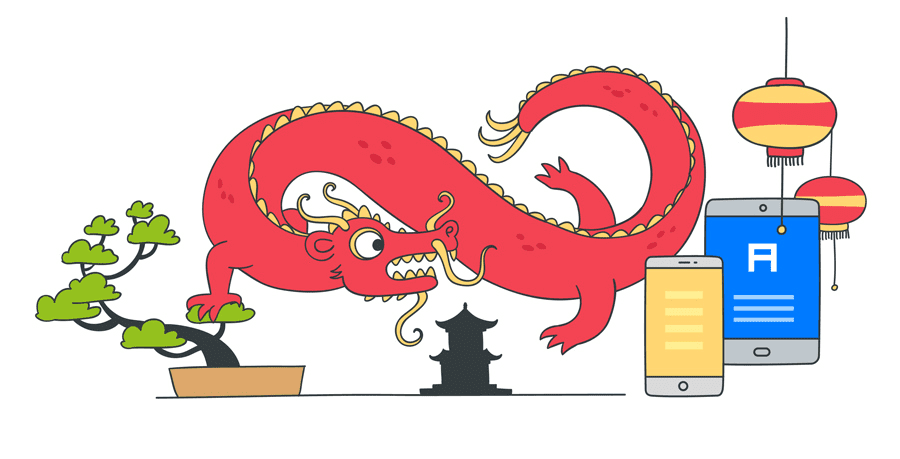
Logically, it makes the most sense to select holidays that match your users’ locale. In the majority of Asian countries (except for Japan), the Lunar New Year is the most important holiday of the year. Easter events are popular among European and American users, but would be inappropriate for an Arab audience.
Pay special attention to emerging markets, which are growing at an incredible speed, and experiment with events specifically designed for them. These markets encompass Latin America, Southeast Asia, and the broader Middle East region.
Users in Arab countries are renowned for their high ARPPU (Average Revenue Per Paying User). During the Islamic holiday of Ramadan, which lasts for a month, Arab users spend serious money while gaming—just like their English-speaking counterparts during the Christmas season.
Here’s a brief holiday calendar to inspire you with ideas for new game content:
Winter holidays
-
December 25 — Christmas (Catholics and Protestants)
-
December 31/January 1 — New Year’s Day (nearly everywhere except Asia)
-
January–February — Lunar New Year/Spring Festival (China and Southeast Asia; in Japan, New Year’s Day is celebrated January 1)
-
February 14 — Valentine’s Day (nearly everywhere except Asia)
-
February–March — Chinese Lantern Festival
-
February–March — Brazilian Carnaval
Spring holidays
-
March 17 — St. Patrick’s Day (Ireland and English-speaking countries)
-
March–April — Hanami, the Cherry Blossom Festival (Japan)
-
March–April — Ramadan (Arab countries)
-
April — Easter (USA, Russia, Europe)
-
April 29–May 5 — Golden Week in Japan (long weekends)
-
May–June — Dragon Boat Festival (China)
Summer holidays
-
June 20 — Midsummer, the summer solstice holiday (Sweden and Finland)
-
Early July — the week-long Fiesta del Fuego (Cuba)
-
July 7/August 7 — the vivid and romantic holiday of Tanabata (Japan)
-
July 20 — Friendship Day (Latin America)
Autumn holidays
-
September — Mid-Autumn Festival (Asia)
-
September–October — Oktoberfest (Europe)
-
October 1 — National Day of the People’s Republic of China (China)
-
October 27 — Diwali, the festival of lights (India, Malaysia)
-
October 31 — Halloween (USA)
-
November 11 — Singles’ Day or Double 11, when significant sales are held (China)
-
Late November — Thanksgiving and Black Friday, a time of significant sales (primarily in the USA, but Black Friday as a commercial holiday has gained popularity in other countries as well)
As you may have noticed, many holidays have movable dates and can last for several days. For example, Black Friday usually doesn’t stop at Friday: sales begin on Thanksgiving itself (Thursday) and end on Monday, which has now become Cyber Monday—a special day for online sales. In games, holidays like Halloween and Christmas can last for weeks.
Some countries have special holidays just for women or for men. In Japan, March 3 is Girls’ Day, while May 5th is Boys’ Day. In Russia and many of the CIS countries, March 8 and February 23 fill the same role. And the USA and other English-speaking countries celebrate Mother’s Day and Father’s Day (the dates of which vary by country).
Many holidays have their own specific symbols, and these can be incorporated into holiday skins, such as different-colored lanterns (Ramadan), cherry trees in full bloom, Easter bunnies and chocolate eggs (for Western cultures), etc. Holidays can also serve as an opportunity for promotions.
Because when translating new characters for holiday events. Take the Narcade team: for Valentine’s Day, they decided to give their game’s cat protagonist a girlfriend. The two feline lovebirds were named Tia and Mia. The problem was that those names provide no indication of which ones are male and which are female, which is crucial for translations into many languages, including Italian, Spanish, and Russian. Fortunately, the folks at Narcade remembered to leave a note for the translator in their Nitro order: as it turned out, Tia is male and Mia is female..
How do you observe holidays within a game?
Holidays can be observed in many different ways, from decorating the icon (usually an indication of new game content) or thematic skins to holiday-themed quests, new levels, and in-game objects.
Each year, World of Warcraft holds an event called Hallow’s End (the Russian version plays off the word tykva, or pumpkin; the German employs a term meaning “scary night”; and the Italian uses “shadows”). Hallow’s End is an in-game version of Halloween and is celebrated from October 18 to November 1. During this period, the game introduces new characters, pumpkin-flavored treats, costumes, and additional content.
One subtlety of holiday events is worth noting. The goal of the mobile game developer is to entertain players with fresh, new content, while also generating more revenue than is spent on development. As a rule, companies generally plan for 2–3 large-scale events per year, since preparation takes time and the costs are high.
Players, however, expect new developments at least once a month. For this, you can use less important holidays or even create your own! For example, you might include the game’s anniversary, the summer or winter solstice, International Talk Like A Pirate Day, and so on.
These kinds of minor holidays can be added to the game through live operations. Live ops refer to changes made to a project without releasing a new version or update. The way it works is this: the new feature is implemented beforehand and is automatically made available to players at a predetermined moment. Plus, you don’t have to sit around waiting for store approval, uncertain of whether your event will make it into the game by the deadline..
Examples of events from various games
-
In Dota 2, the annual winter holidays Frostivus (celebrated around Christmas time) and New Bloom (coincides with the Chinese New Year festivities).
-
In World of Warcraft, around Oktoberfest, the game’s universe observes Brewfest. The game has also established events surrounding International Talk Like A Pirate Day.
-
World of Warcraft holds an event called “Love is in the Air,” based on Valentine’s Day.
-
World of Tanks observes Kupala Night — a holiday celebrated in Eastern Europe, also known as St. John’s Eve. A flower opens the locks of all treasure vaults.
-
Mad GunZ has an arsenal of winter weaponry that users can only acquire during the holiday season.
-
The game Magic Jigsaw Puzzles introduced its “Winter Story” event, the goal of which is to collect holiday currency, advance a sleigh closer to Santa, and earn prizes.
How to attract users to events?
Creating an event is only half the battle. After that comes the all-important task of attracting users, encouraging them to make in-game purchases and take part in the activities you’ve organized.
Here are a couple of ideas for how to accomplish this:
1. Push notifications. Send a push notification to existing users to inform them about your upcoming event. Add emoji to your notifications: experiments conducted by the company Pixonic have shown that emoji boosts a notification’s effectiveness.
Here are a few sample push notifications to get your creative juices flowing:
-
SUMMER SALE Summer is the best time of the year! Don’t miss our best offer of the summer: everything is 50% off!
-
Our hottest offer for these warm summer days: get twice as much stuff for the same price!
-
HARVEST FESTIVAL Late summer is harvest time. Time to reap your rewards — everything is 50% off!
-
HALLOWEEN brings scarily reasonable prices: everything is 50% off! Prices slashed!
-
BLACK FRIDAY Don’t miss this terrific deal: get twice as much stuff for the same price!
2. Social networks. Announce your special offer or event on social networks, and host holiday-themed contests to attract a larger audience.
3. What’s New. Don’t forget to give glowing descriptions of new features in your “What’s New” section. This will bring back old users to the game and attract new ones.
How AI and ChatGPT Can Revolutionize Holiday Updates in Game
By rapidly generating narratives, missions, and festive dialogue, AI tools like ChatGPT can significantly assist game creators in creating holiday updates. For holidays like Christmas, Halloween, or Lunar New Year, it can come up with ideas for themed products, prizes, and small-scale activities.
Additionally, ChatGPT can assist in localizing content for global audiences by culturally adapting jokes and references to ensure relevance and accuracy. This guarantees that seasonal events are understood by players everywhere without requiring additional translation work.
AI is capable of creating entertaining and captivating in-game messaging, push alerts, and social network postings to advertise holiday activities. Developers can use it to model player emotions and adjust difficulty, tempo, and event rewards prior to release. Rapid prototyping is made possible using ChatGPT, which enables the generation and testing of numerous event variations quickly and efficiently.
For writers and designers, it frees up time so they can concentrate on honing the best concepts. AI can make Christmas updates for players feel more timely, personalized, and immersive. All things considered, ChatGPT serves as a productivity enhancer and creative aid, helping developers effectively produce captivating seasonal content.
Wrapping it up
Today, in-game events are an absolute must-have for generating additional revenue and sustaining user interest for as long as possible. Mini-events and special offers are another way to remind players that you’re there and keep them engaged in the game.
Fall and winter with their colorful bouquet of holidays are just around the corner, so now’s the time to start coming up with events. To translate texts for events and special offers quickly and efficiently, we suggest using Nitro, our human translation platform. The convenient self-service mode allows you to place an order right away and receive the translated content within 24 hours. Give it a try!
Related articles
App & Game Localization: How to Reach Mobile Users Around the World: 2026 Update
Apps localization
Game Localization
Global Markets
Nitro
11 minutes read
Finland for Game Devs: A Little Country with Big Possibilities
Game Localization
Global Markets
Nitro
8 minutes read
Popular articles
Understanding Machine Translation and Post-Editing: 4 Common Questions
Machine Translation
7 minutes read
Best localization and translation platforms comparison
Apps localization
Nitro
12 minutes read
The Most Popular Languages for Localization in 2021: An Overview from Alconost
Apps localization
Global Markets
14 minutes read
Latest articles
No Playbook, No Problem: What Happens When You Trust Your Team with Something New
Game Localization
Success stories
4 minutes read
AI or Human Translation: Which One Fits Your Project Best?
Machine Translation
4 minutes read
Alconost Releases an Advanced Approach to Game Localization, Helping Developers Save up to 30% on Costs
Game Localization
5 minutes read
Have a project in mind?
We’d like to learn more about it. In return, we’ll get back to you with a solution and a quote.