Back to blog

Posted by Kris Trusava
The Korean Game Market: A Comprehensive Overview: 2026 Update
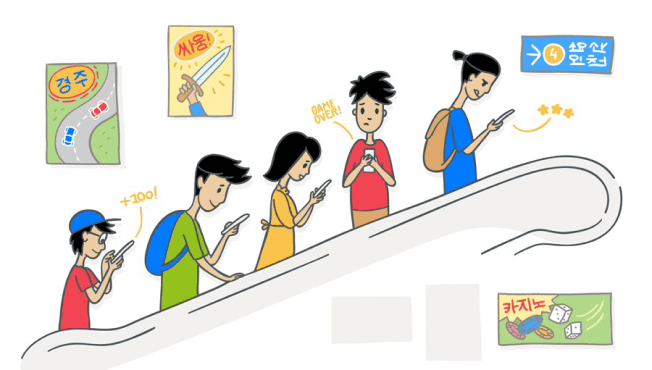
If you’re looking to break into the Asian gaming world, South Korea should be at the top of your strategy list.
The original version of this article was based on data from 2018-2020. This updated edition reflects the most recent data available as of February 2026.
The nation continues to dazzle with its profits, inventiveness, and fervent player base, ranking as the world's fourth-largest gaming market. [Newzoo, 2024]. However, Korean players are highly selective and place a high value on cultural and linguistic authenticity, so just releasing a game there is insufficient. Your game may lose credibility very fast if your localization and translation aren't flawless.
This article will cover the Korean game market, player preferences, and purchasing patterns, and provide crucial localization advice. We'll also discuss how ChatGPT and other AI-powered translation tools are revolutionizing localization, enabling developers to make quicker and more informed adjustments.
South Korea: Audience Overview
In South Korea, the popularity of gaming has increased to unprecedented levels in 2024. Out of around 52 million people, over 70% of them play video games in some capacity. [IMARC, 2024]. Even while men still make up the majority of gamers, female participation has increased dramatically due to the rise of casual smartphone games and puzzle-based role-playing games.
The age range of the player base is broad. While esports arenas are dominated by adolescents and twenty-somethings, console and mobile game players in their 30s and 40s make up a sizable portion of the player base. In Korea, the notion that gaming is "only for youth" is rapidly dispelling.
Game Revenues and Spending
Gamers from South Korea are some of the world's most devoted consumers. Revenues are expected to exceed $7.3 billion annually by 2023, placing the nation in the top five worldwide, according to Newzoo.
Sensor Tower reports that, in the first three quarters of 2024, mobile games generated approximately $3.7 billion, with RPGs accounting for around 52% of that revenue.
The average gamer spends more than $230 a year, which is significantly more than the global average [Xsolla, 2024]. Although free-to-play games continue to dominate the market, hybrid monetization techniques are gaining popularity.
Game preferences
Korea's gaming culture was influenced by its early adoption of 5G technology and its recognizable PC bangs, or internet cafés. The following preferences are particularly noteworthy today:
-
Competitive gameplay is highly valued.
-
Multiplayer and cooperative mechanics are essential.
-
Gaming is as much about socializing as it is about entertainment.
RPGs continue to dominate the genre, accounting for more than 55% of the market, according to Sensor Tower. Casual and simulation games are becoming increasingly popular among women and older audiences, followed by strategy and action games. In 2024, revenue from strategy games alone increased 69% year over year.
Top-grossing games in 2024 include
-
Lineage W
-
Odin: Valhalla Rising
-
Honor of Kings.
Mobile vs PC
Although Korea has long been a leader in PC gaming, mobile gaming currently makes up around 60% of total sales. [Xsolla, 2024]. Mobile games are accessible anywhere, from brief breaks at work or school to commuting on the subway, thanks to the portability of smartphones and the speed of 5G networks. Koreans are among the most mobile-engaged people in the world, using smartphone apps for an average of 4.51 hours every day.
Preferences for devices are also necessary. The most popular Samsung Galaxy devices are still those with larger screens. Since more than 65% of newly sold smartphones in Korea have screens that are 6 inches or larger, developers should make adjustments for these devices. [IMARC, 2024].
Localizing Your Game for South Korea: Things to Keep in Mind
Careful attention to detail is necessary for effective localization in Korea. Even a top-notch game runs the danger of annoying players and hurting its financial success without it.
Double-check Your Localized Content
In South Korea, poor translation can be expensive. One well-known example was Blizzard's Overwatch 2, which in 2023 sparked criticism after a Korean event tagline was incorrectly translated. A sentence that sounded heroic became awkward and unclear, annoying the forums. Blizzard was forced to apologize and provide a fast repair.
A note from 2018: There was an infamous case with the game Darkest Dungeons, which in 2018 angered Korean players with poorly localized text. There was a signature phrase in the game, “Claim your birthright,” which for some reason was translated as “Find your life.” And this wasn’t the only line in the game that wasn’t localized correctly. Of course, the mistakes did not go unnoticed. Korean players were deeply upset, and their reaction led the company to apologize publicly.
This demonstrates the significance of expert translation and testing. Even little errors can undermine brand trust and make gamers feel disrespected.
When a game does not live up to their expectations, Korean gamers often express their displeasure. As a result, it is crucial to carry out extensive localization testing in addition to hiring qualified translators. This procedure maintains the game's original meaning and intent while guaranteeing accuracy.
Join Forces with Kakao
Games are more than simply an instrument of entertainment for Korean gamers; they are a form of social interaction and connection. This implies that your game should offer social features, such as the ability to add friends from a player's contact list, send in-game messages or gifts, and play multiplayer modes.
Candy Crush Saga's connection with Kakao, the most widely used chat service in South Korea, is a prime example. After Google Play, Kakao is the second-largest distribution channel for mobile games. Players could send friend invites, share their progress, and use special emojis by connecting the game to Kakao, all of which contributed to the game's immense success.
Kakao has relatively high expectations, though. Every element of your game, including the text and user interface, must adhere to its specifications and be flawlessly localized in Korean. If you get it right, players will enjoy it; if you don't, you can get into trouble.
Localize Images
Although it may seem like a simple step, many developers still ignore image localization, which is something that should be given careful thought in Korea, where gamers are exceptionally aware of this. Visual aspects have a significant impact on how people perceive a game, and even minor mistakes can lead to misunderstandings or controversy.
Ryuji's shoes in Persona 5 serve as a noteworthy illustration. The Rising Sun flag, a symbol associated with several Japanese subcultures, was part of the original design. Ryuji is linked to the yankii subculture in Japan, and it's typical for yankii to wear such insignia on their clothing, helmets, or accessories when they join the bosozoku, a motorcycle gang subculture. The design decision made sense in that cultural environment.
The majority of Korean players, however, are not associated with these subcultures and may not be aware of their importance. Some gamers might have become confused or even outraged if the emblem had remained in the game. The creators removed the flag from Ryuji's shoes for the Korean version to avoid this issue.
This shows a fundamental concept in game localization: knowing your audience's cultural background is just as crucial as accurately translating the text. By altering more than just the words, the game will appeal to the intended audience and prevent inadvertent miscommunications.
A Small Case Study from Alconost: Mad GunZ and Blocky Cars
Full HP, a well-known worldwide game studio, is the developer of the games Mad GunZ and Blocky Cars. The corporation made the games available in 12 languages to attract a worldwide audience, providing early access to the Russian market. To ensure the games were tailored entirely for every audience, Full HP collaborated with Alconost, a reputable localization company, for other territories, including Korea.
One of the main markets targeted was Korea, which required special attention. For example, the game ads were modified to accommodate local tastes by changing the horizontal pictures to vertical ones and adding more vibrant and colorful graphics, which are known to appeal to Asian gamers. However, because Korean gamers are often more receptive to original designs than those in other regions, such as China, the in-game characters and fundamental visuals were retained.
To ensure that the game felt natural and engaging to Korean players, however, careful attention to details was required. To guarantee a seamless and culturally relevant experience, every aspect—from marketing collateral to little interface components—had to be thoroughly examined.
Word Order and Writing
Changing the writing system and user interface for the target language is a crucial aspect of localization. For instance, when localizing a game for Chinese audiences, more space must be allocated because Chinese characters are typically larger than those in English.
Korean poses particular difficulties of its own. When creating menus, buttons, and other user interface components, it is crucial to keep in mind that a single Hangul character often occupies almost twice the area of an English letter. Although vertical writing is primarily out of style, Korean can be written both horizontally (from left to right) and vertically. It is not appropriate for typical gameplay or app material, but rather for historical documents or decorative features in games.
Korean and English have quite different word orders. For example, the larger number is mentioned first when numbers are included in a phrase. Therefore, in Korean, a sentence such as "Select 2 out of 5 potions" would be translated as "Out of 5 potions, select 2."
Words with many meanings present another significant issue. For instance, the term "chest" might describe a treasure chest, a box, or a human chest. Once, NeverEnding Games mistranslated the Korean phrase "Special Chest," which was meant to read "special treasure chest," as "Special Human Chest." Although the error was promptly corrected, it serves as a powerful reminder of the importance of expert translation and meticulous localization.
Localization of Pricing
Although Korean gamers have a reputation for being big spenders, it takes careful localization of pricing to entice them to make a purchase.
The first rule is that you should never use foreign currency, such as the euro or the dollar. Players expect to see prices in Korean won, written as either ₩ or 원 — both are widely accepted. Avoid using the abbreviation KRW, as it is uncommon and may feel unfamiliar to local users.
Clarity is also crucial. Prices should be simple to read and comprehend, which entails keeping to whole amounts, avoiding decimal points, and appropriately employing commas. For example, write ₩1,200 rather than ₩1,120.00. Properly localized pricing builds trust and encourages in-game purchases.
The Rise of AI in Localization
The emergence of AI-powered localization technologies is one of the most interesting trends for 2024. Already, programs like ChatGPT can accurately translate and modify text into Korean, particularly when optimized for gaming scenarios.
AI provides cost-effectiveness, scalability, and speed. It can assist in producing initial drafts, identifying discrepancies, and even proposing culturally appropriate substitutes. Human knowledge is still essential, though. Human translators excel in aspects such as tone, language, and nuance, which Korean gamers are susceptible to.
The future likely lies in hybrid processes, where AI handles the heavy lifting, and professionals tweak the product for authenticity. This combination guarantees both effectiveness and cultural richness.
Summing Up
It is anticipated that the Korean gaming market will reach over $13.7 billion by 2024 and continue to grow steadily until 2029. [Xsolla, 2024]. However, the potential rewards are significant. The business continues to expand steadily, and Korean gamers are willing to invest in games. You can reach a sizable, active player base that is eager and prepared to make in-app purchases by successfully localizing your game for Korean audiences. In addition to growing your fan following, this can yield a high return on investment and possibly rank your game among the best in Korea.
Community-driven translation alone is not enough to meet the high standards of Korean gamers. Combining crowdsourcing and professional localization is the most efficient way to ensure fast delivery, correctness, and cultural appropriateness while maintaining the subtleties of the Korean language and communication style.
Sources
Related articles
Dos and Don'ts of Bringing a Game to the Japanese Market
Game Localization
Global Markets
7 minutes read
How Should Mobile Games from European Countries Be Localized in the Asian Market
Game Localization
Global Markets
9 minutes read
Popular articles
Understanding Machine Translation and Post-Editing: 4 Common Questions
Machine Translation
7 minutes read
Best localization and translation platforms comparison
Apps localization
Nitro
12 minutes read
The Most Popular Languages for Localization in 2021: An Overview from Alconost
Apps localization
Global Markets
14 minutes read
Latest articles
No Playbook, No Problem: What Happens When You Trust Your Team with Something New
Game Localization
Success stories
4 minutes read
AI or Human Translation: Which One Fits Your Project Best?
Machine Translation
4 minutes read
Alconost Releases an Advanced Approach to Game Localization, Helping Developers Save up to 30% on Costs
Game Localization
5 minutes read
Have a project in mind?
We’d like to learn more about it. In return, we’ll get back to you with a solution and a quote.